IS YOUR DAMPING SYSTEM CORRECTLY DIMENSIONED?
Know how your system will respond before you build it.
Fill in the request form
or see what we calculate

CALCULATE BEFORE YOU COMMIT
Selecting a damper based on weight alone does not tell you how the complete system will behave under shock or vibration.
Mass, centre of gravity, mounting position, frequency, shock level and direction of loading all affect the dynamic response.
In-house calculation software
Our in-house Calculation & Simulation Software combines these variables to predict system behaviour and dimension the damping solution around the actual load case.
What we can evaluate for your project
✓ Shock Response Spectra (SRS)
✓ Accelerations and displacements
✓ Internal forces and stresses
✓ Resonance and dynamic response
✓ Non-linear spring and damping behaviour
✓ Direction-dependent loading
Engineering aligned with international requirements

From calculation to the right damper
The calculation determines what the damping system must do. From there, the right product, stiffness, and configuration can be selected for the application.
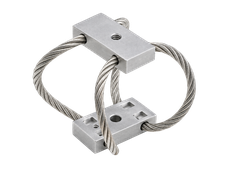
KQV2.5 20-02
KQV2 .5 20 - 02
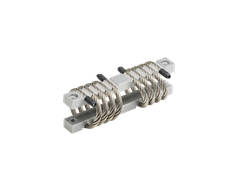
JV1.5 1-10
JV1.5 1 - 10
JV1.5 15-10
JV1.5 15 - 10
JV1.5 5-10
JV1.5 5 - 10
JV1.5 3 - 10
JV1.5 3 - 10
All our products are manufactured and tested in Europe.
“A damper that supports the weight is not necessarily a damper that survives the load case.”
Calculation & Simulation is used in:


Calculation & Simulation Software (CSS)
Predict system behaviour before final selection.
Our proprietary software models spring and damper systems under shock and vibration loads in both the time and frequency domains.
This makes it possible to evaluate the response before the final damper and mounting configuration are selected.
Field Measurement provides the real-world data; CSS turns that data into a validated, certifiable design.
✓ Displacement
✓ Velocity
✓ Acceleration
✓ Internal forces
✓ Stresses
✓ Energy dissipation
✓ Shock Response Spectra
- Shock events
- Repeated shock
- Sine and vibration excitation
- Direction-dependent loading
- Non-linear spring characteristics
- Project-specific profiles
Field Measurement & Data Logging (FMD)
No reliable load data available yet?
A calculation is only as reliable as its input.
When operational shock or vibration data is unknown, loads can first be measured in the real environment using standalone data loggers.
Measured data can then be converted into load cases and SRS curves for calculation and dimensioning.
✓ Real operational loads are unknown
✓ Existing data is unreliable or incomplete
✓ Unexpected vibration behaviour occurs
✓ Real-world input is required for verification
TURN YOUR LOAD CASE INTO A PREDICTED SYSTEM RESPONSE
A calculation starts with the equipment and the conditions it must withstand.
We combine the available project data into a dynamic model and evaluate how the complete spring-damper system responds to the defined excitation.
Typical input includes:
✓ Equipment weight and dimensions
✓ Centre of gravity
✓ Mounting points and orientation
✓ Shock and vibration profiles
✓ Frequencies and acceleration levels
✓ Applicable standards or project requirements
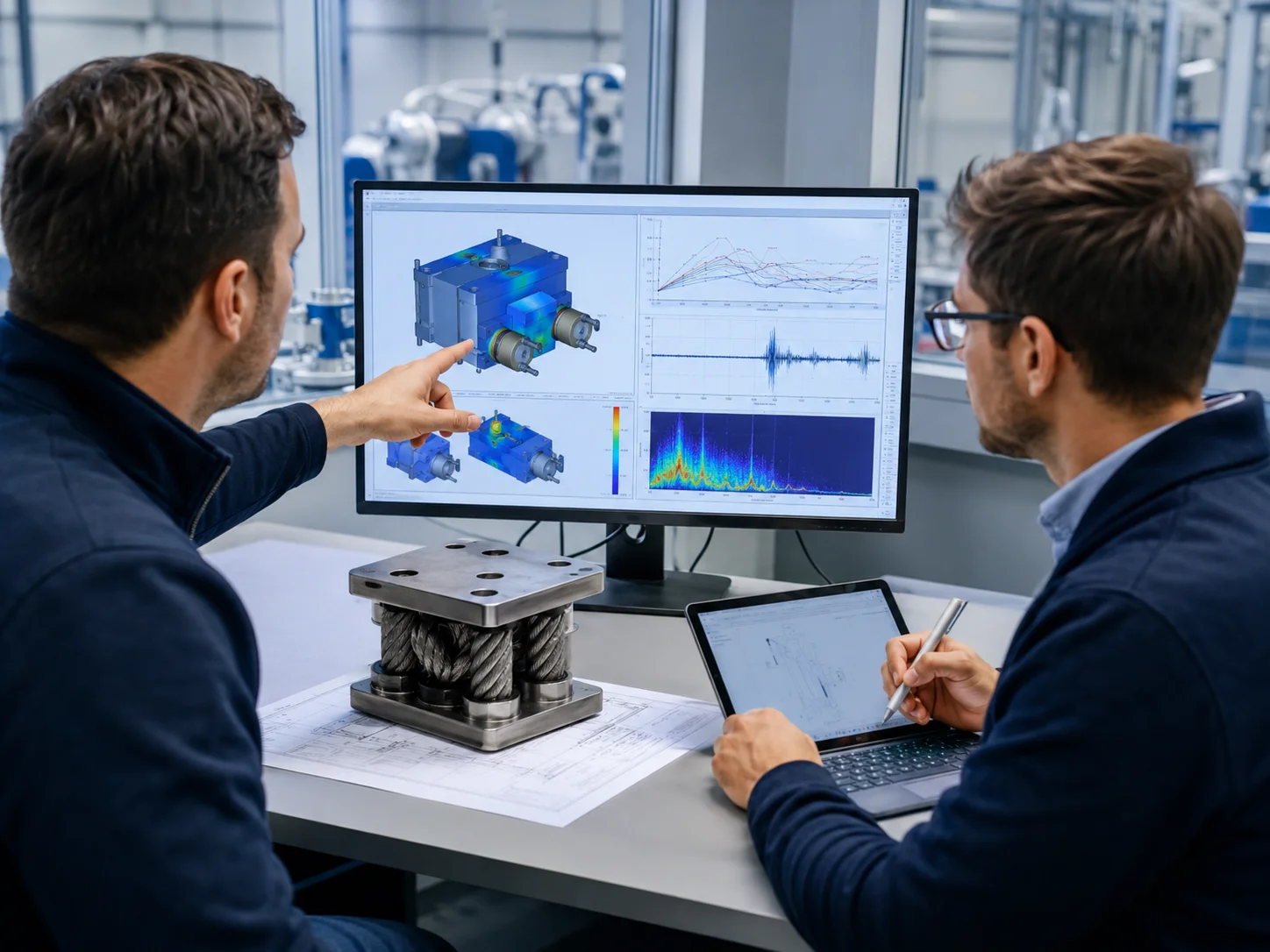
How does Calculation & Simulation work?
1. Define the system
We start with mass, dimensions, centre of gravity and mounting layout.
2. Define the load case
Shock, vibration, frequency, direction and applicable requirements are added to the model.
3. Simulate the dynamic response
Spring and damping behaviour are calculated in the time and/or frequency domain.
4. Evaluate critical parameters
Acceleration, displacement, forces, stresses and SRS response are checked against the project requirements.
5. Dimension the damping solution
The results are used to select or optimise the damper and mounting configuration.
Frequently asked questions from clients
Ideally, we receive equipment weight, dimensions, centre of gravity, mounting layout and the applicable shock or vibration profile. Technical drawings and existing measurement data can also be included.
Then we can first determine whether field measurement is required. Real operational data can be recorded and converted into load cases for the simulation.
Yes. Calculations can support requirements including MIL-STD-810, MIL-STD-167, MIL-STD-901, AECTP-400 and DEF STAN 00-035, as well as project-specific specifications.
Not always. Calculation helps dimension and optimise the system before testing. Where physical validation is required, calculated results can subsequently be correlated with shock and vibration test data.
Yes. Damping Solutions offers a first calculation free of charge to evaluate the application and recommend an appropriate isolation concept.
ALREADY HAVE YOUR LOAD AND VIBRATION DATA?
Then there is no need to start with measurement.
Send us your equipment data, mounting layout and available shock or vibration profile. Our engineers can use it as the starting point for a preliminary calculation and damping recommendation.
Not sure if your data is sufficient? Send what you have. We will tell you what is still needed.

Ready to know how your system will respond?
Start with a free calculation
Our engineers perform a first calculation free of charge.
Send us your load and frequency data, and we'll recommend the right isolation concept with full documentation for your engineering or procurement process.